
The Fascinating World of Grammatical Gender: Why Some Languages Sort the World and Others Don't

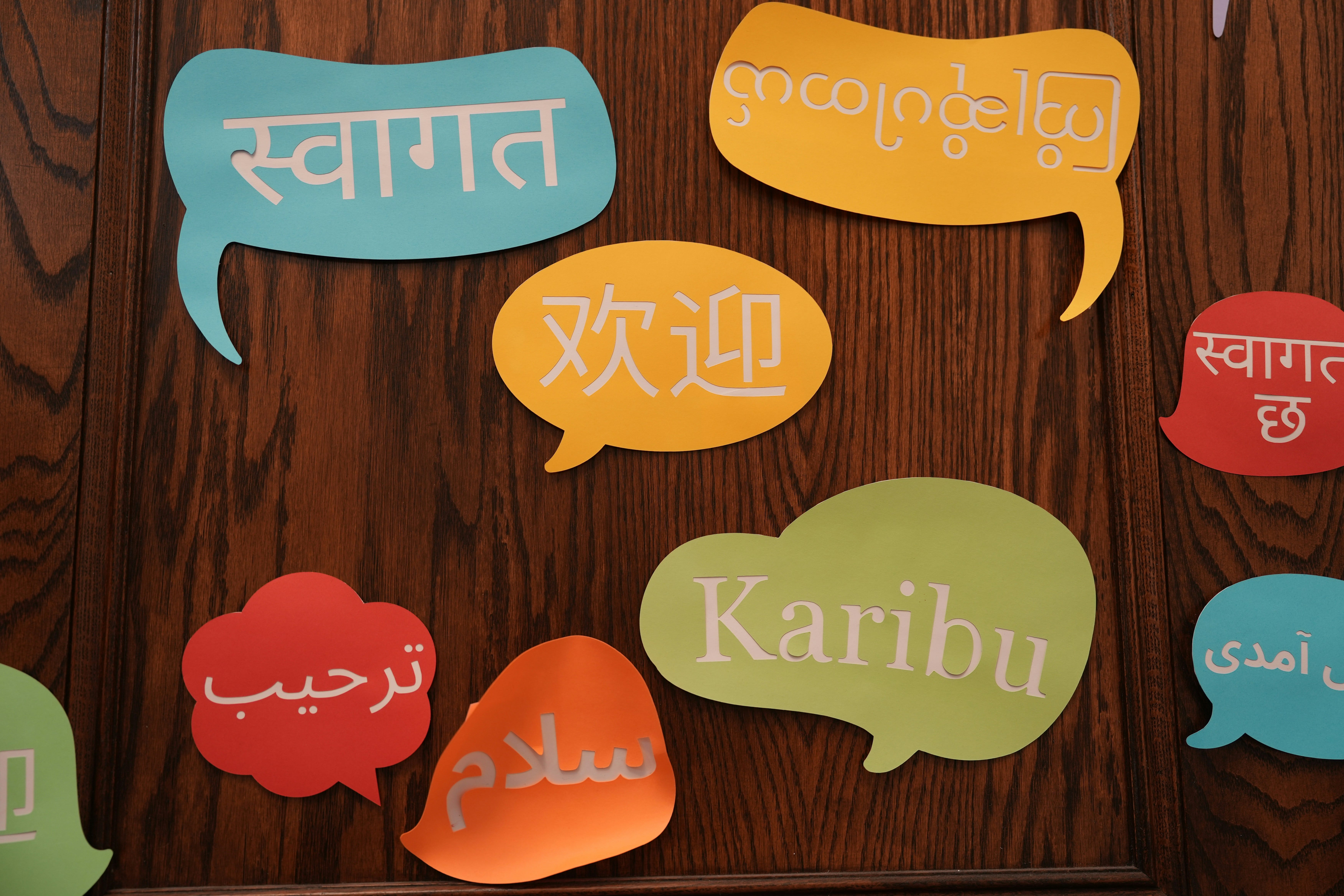
Photo by zhendong wang on Unsplash
Everything described here is just my view. This doesn't represent views of any of my
employers, past, present and future. I am not an expert in anything and this is just
my observation from various posts listed on the internet. I have used AI to summarise
and learn and structure the content.
The presence or absence of grammatical gender in a language is one of the most fascinating puzzles in linguistics. While it might seem logical to categorize the world by biological sex, languages like English have mostly abandoned it, while others like German, Spanish, or Arabic lean into it heavily.
There isn’t one single reason why this happens, but rather a mix of evolutionary history, cognitive utility, and how our brains organize information.
To explore this, we’ll look at:
The Global Picture
Indo-Aryan family (Hindi, Sanskrit, Bengali)
Dravidian family (Tamil)
These languages handle gender in remarkably different ways, ranging from strict grammatical rules to systems based purely on whether something is “rational” or “irrational”.
Part I: The Global Picture — Why Gender Exists (and Why It Disappears)
The Inheritance Factor (Language Families)
Most languages don’t “choose” to have gender; they inherit it. Indo-European Roots, most European and Indian languages descend from Proto-Indo-European.
The original animate/inanimate split evolved into the three-gender system seen in Latin, Greek, and Sanskrit. From there, each branch went its own way:
Latin (three genders) → Spanish and French (two genders — masculine and feminine; neuter merged into masculine)
Proto-Germanic (three genders) → Old English (three genders) → Modern English (natural gender only)
Proto-Slavic (three genders) → Russian (still three genders with complex agreement patterns)
Loss Over Time: English is the most dramatic example of gender loss in a major Indo-European language.
Old English had three full genders, sēo sunne (”the sun,” feminine), se mōna (”the moon,” masculine), þæt wīf (”the woman,” neuter!).
The Viking invasions (8th–11th centuries) brought Old Norse speakers into contact with Old English speakers. Since the two languages were similar in vocabulary but had different gender assignments, gender markers became confusing and were gradually abandoned.
The Norman Conquest (1066) accelerated this by introducing French vocabulary with yet another set of gender assignments. By the 14th century, English had essentially given up on the entire system.
Categorization as a Mental Tool
Grammatical gender is a form of noun class or a way for the brain to tag and organize vocabulary.
Agreement and Clarity: Gender helps with “agreement.” In Spanish, if you say ”La pequeña casa roja” (”The small red house”), the feminine -a ending on every word links them together. In a noisy room, if you hear a feminine
adjective, your brain automatically filters out all masculine nouns as possible matches, speeding up comprehension.
Beyond Male/Female: Some languages have dozens of “genders” that have nothing to do with biological sex. The Bantu language family (including Swahili, Zulu, and Luganda) can have up to 18–20 noun classes, categorizing things into groups like “humans,” “plants,” “long thin objects,” “tools,” “liquids,” and “abstract concepts.”
In Swahili:
- m-tu / wa-tu (person / people — human class)
- ki-tabu / vi-tabu (book / books — object class)
- m-ti / mi-ti (tree / trees — plant class)
The class prefixes change for both the noun and anything that agrees with it, creating a rich system of semantic classification far more granular than the European masculine/feminine model.
The “Luck of the Draw” (Phonological Drift)
Linguists often note that grammatical gender is frequently arbitrary. There is no biological reason why a “table” is feminine in French (la table) but masculine in German (der Tisch).
Phonological Drift: Sometimes a word ends up in a gender category simply because it sounds like other words in that category. In Spanish, most words ending in *-o* are masculine and most ending in -a are feminine. When a new word enters the language, it tends to be assigned gender based on its ending, regardless of meaning. El problema (”the problem”) is masculine despite ending in -a because it came from Greek, where it was neuter and Spanish absorbed neuter Greek/Latin words the masculine category.
Cross-Linguistic Surprises: “The sun” is masculine in French (le soleil) and Spanish (el sol), but feminine in German (die Sonne) and Old English (sēo sunne). “The moon” is feminine in French (la lune) but masculine in German (der Mond). These differences reflect thousands of years of independent phonological and analogical drift since these languages diverged from their common ancestor.
Summary Table
|
Part II: The South Asian Spectrum
1. Sanskrit: The Complex Ancestor
Category: Strict Grammatical Gender (Three-Gender System)
Sanskrit is the “Latin” of South Asia in terms of its grammatical structure. It uses a rigorous system where every noun whether it refers to a person, an object, or an abstract idea is assigned one of three genders: Masculine (puṃliṅga), Feminine (strīliṅga), and Neuter (napuṃsakaliṅga).
Agreement: Adjectives and verbs must change their endings to agree with the noun’s gender.
For example, the adjective “beautiful” shifts form depending on what it describes:
sundaraḥ bālakaḥ (सुन्दरः बालकः) — “The beautiful boy” (masculine)
sundarī bālikā (सुन्दरी बालिका) — “The beautiful girl” (feminine)
sundaram phalam (सुन्दरं फलम्) — “The beautiful fruit” (neuter)
Arbitrary Nature: The word for “wife” can be masculine (dārāḥ — दाराः), feminine (bhāryā — भार्या), or neuter (kalatram — कलत्रम्) depending on which synonym you choose. Similarly, “tree” is masculine as vṛkṣaḥ (वृक्षः) but neuter as taruḥ in some usages.
The gender is attached to the word itself, not the thing it represents.
Where Did Sanskrit Get Its Gender?
Sanskrit inherited its three-gender system from Proto-Indo-European (PIE), the reconstructed ancestor of most European and Indian languages, spoken roughly 4500–2500 BCE on the Pontic Steppe. Scholars believe PIE originally had a simpler two-way split animate vs. inanimate rather than masculine vs. feminine. Over time, the “animate” class fractured into masculine and feminine, possibly driven by the grammatical endings that certain nouns happened to carry.
The inanimate class became the neuter. This is why Sanskrit’s neuter nouns often refer to abstract or non-living things (jalam — water, phalam — fruit), while the masculine-feminine split among living beings can feel arbitrary. The three-way system was already fully established by the time of the Rigveda (c. 1500 BCE), the earliest Sanskrit text.
2. Hindi: The Simplified Descendant
Category: Strict Grammatical Gender (Two-Gender System)
As Sanskrit evolved into Modern Hindi through the intermediate stages of Prakrit and later Apabhraṃśa (roughly 600 CE–1000 CE), the language simplified its system by dropping the neuter gender entirely. Hindi retains only Masculine and Feminine.
Vivid Agreement: Hindi is famous for how “gender-heavy” its verbs are. Even the past tense and habitual forms shift based on the subject’s gender:
Laḍkā jātā hai* (लड़का जाता है) — “The boy goes”
Laḍkī jātī hai* (लड़की जाती है) — “The girl goes”
Laḍkā gayā* (लड़का गया) — “The boy went”
Laḍkī gayī* (लड़की गई) — “The girl went”
Inanimate Objects Are Strictly Gendered: A “table” (mez — मेज़) is feminine, while a “room” (kamrā — कमरा) is masculine. “Water” (pānī — पानी) is masculine in Hindi, though it was neuter in Sanskrit. When the neuter category disappeared, its former members were redistributed, sometimes by phonological patterns (words ending in -ā often became masculine, words ending in -ī often became feminine), sometimes seemingly at random.
The Road from Sanskrit to Hindi
The journey went through several stages: Sanskrit → Pali → Shauraseni Prakrit → Shauraseni Apabhraṃśa → Old Hindi (Khariboli) → Modern Hindi. The neuter gender began weakening in the Prakrit Stage (c. 300 BCE–600 CE). By the time of Apabhraṃśa, it had largely merged into the masculine or feminine categories. Linguists point to the erosion of case endings as a key driver; as the distinct neuter endings wore away through everyday speech, speakers could no longer distinguish neuter nouns from masculine ones, and the category simply collapsed.
3. Bengali: The Outlier
Category: Genderless (Gender-Neutral)
Despite being an Indo-Aryan language like Hindi and Sanskrit, Bengali famously dropped almost all grammatical gender over centuries of evolution. This makes it a striking outlier in its own family.
Neutral Pronouns: Bengali uses the same third-person pronoun she (সে) for he, she, and it. There is no distinction at all:
She boi poṛche (সে বই পড়ছে) — “He/She is reading a book”
No Verb Agreement: Unlike Hindi, the verb does not change based on whether a man or a woman is the subject:
Chheleti jācche* (ছেলেটি যাচ্ছে) — “The boy is going”
Meyeti jācche* (মেয়েটি যাচ্ছে) — “The girl is going”
The verb jācche stays the same in both sentences.
Adjectives Stay Fixed: Adjectives remain unchanged regardless of the noun they describe, making Bengali much closer to English or Turkish in its handling of gender:
bhālo chele (ভালো ছেলে) — “good boy”
bhālo meye (ভালো মেয়ে) — “good girl”
How Did Bengali Lose Its Gender?
Bengali descended through a different Prakrit branch than Hindi: Sanskrit → Pali → Magadhi Prakrit → Magadhi Apabhraṃśa → Old Bengali → Modern Bengali.
Magadhi Prakrit, spoken in eastern India, was already showing signs of gender erosion much earlier and more aggressively than its western counterparts. By the Old Bengali period (c. 900–1400 CE), the three-gender system had fully collapsed. Linguists offer several explanations. The eastern Prakrits had extensive contact with Austro-Asiatic languages (like Santali and Mundari) and Tibeto-Burman languages, both of which are typically genderless. This sustained contact likely accelerated the erosion.
Additionally, the simplification of noun endings in Magadhi Prakrit, even more drastic than in western dialects, removed the very markers that carried gender information. Once the endings were gone, there was nothing left to sustain the system.
Interestingly, Assamese and Odia, Bengali’s closest linguistic siblings, also dropped grammatical gender, suggesting this was a regional phenomenon across eastern Indo-Aryan languages rather than something unique to Bengali alone.
4. Tamil: The “Rational” System
Category: Natural / Social Gender (Noun Classes)
Tamil belongs to the Dravidian family, which uses a very logical “class” system rather than the arbitrary system of Hindi or French.
High Class (Rational — uuyartiṇai, உயர்திணை): This category is for gods and humans. It is then subdivided into Masculine (āṇpal, ஆண்பால்) and Feminine (peṇpal):
Avan vandhān* (அவன் வந்தான்) — “He came”
Avaḷ vandhāḷ* (அவள் வந்தாள்) — “She came”
Low Class (Irrational — aḵṟiṇai, அஃறிணை): This category includes animals, plants, and inanimate objects. It is essentially a “neuter” class for everything that isn’t human:
Adhu vandhadhu* (அது வந்தது) — “It came” (used for an animal, a stone, water, a concept)
Logic-Based: Unlike Hindi, you will never find a “feminine” table or a “masculine” chair in Tamil. If it doesn’t think or speak, it is “irrational.” The gender of a noun is determined by its real-world nature, not by an arbitrary grammatical label.
The Deep Roots of the Dravidian System
Tamil’s system traces back to Proto-Dravidian, spoken perhaps 4,000–5,000 years ago, likely in central or southern India. Proto-Dravidian is reconstructed as having this same rational/irrational distinction, making it fundamentally different from Proto-Indo-European’s animate/inanimate split (which evolved into masculine/feminine/neuter). The earliest Tamil literature, the Sangam poems (c. 300 BCE–300 CE), already shows this classification fully in place. Tolkāppiyam (தொல்காப்பியம்), the oldest surviving Tamil grammar (estimated 3rd century BCE), explicitly lays out the tiṇai (class) system.
Remarkably, this system has remained largely stable for over two millennia. While Tamil’s vocabulary and phonology have evolved, its approach to gender classification has barely changed, a stark contrast to the dramatic shifts seen in the Indo-Aryan branch.
Other Dravidian languages show variations: Telugu and Kannada, influenced by centuries of contact with Sanskrit, adopted some aspects of grammatical gender, blending the Dravidian class system with Indo-Aryan-style agreement.
Malayalam, though closely related to Tamil, simplified even further, in colloquial speech, the rational/irrational distinction has weakened, and gender marking is less prominent than in Tamil.
Summary Table
So Why Doesn’t Everyone Just Drop It?
While English dropped gender for simplicity, other languages keep it because it provides redundancy. Redundancy in language is actually a good thing. It acts like a “checksum” in computing, ensuring that if you miss one word in a sentence, the grammatical markers on the other words help you piece the meaning back together.
In a language like Spanish, if you hear ”...pequeña...” in a noisy café, you immediately know the speaker is describing something feminine, which narrows down the possibilities even if you missed the noun. In English, if you miss the noun, the adjective “small” gives you no such clue.
Languages also resist dropping gender because it is deeply woven into their morphology. Hindi speakers don’t consciously “choose” to assign gender to a table. It is as automatic as conjugating a verb. Changing the system would mean restructuring thousands of words and the agreement rules that connect them. Languages do change this way, but it takes centuries of gradual erosion, usually accelerated by intense contact with other languages (as happened with English and Bengali) or a collapse in the inflectional system that carried gender information.
The story of grammatical gender is, ultimately, a story about how languages balance complexity and clarity, inheritance and innovation, logic and historical accident. Every language has found its own equilibrium and that diversity is what makes linguistics endlessly compelling.
Grammatical Gender and AI: A Modern Complication
The distinction between gendered and genderless languages has taken on a new dimension in the age of artificial intelligence. When AI translation systems encounter a genderless language like Turkish, Mandarin, or Bengali where a single pronoun covers “he,” “she,” and “it” they must choose a gender when translating into a gendered language like Spanish or Hindi.
This forces the model to make assumptions, and those assumptions often reflect societal biases embedded in training data: “doctor” defaults to masculine, “nurse” defaults to feminine. Gendered languages also carry a heavier grammatical load for AI. Every adjective, verb ending, and article must agree in gender, multiplying the points where errors or biases can surface.
Genderless languages, by contrast, sidestep this complexity entirely, though they introduce their own challenge: when translating into them from a gendered source, meaningful gender information (such as a character’s identity in a novel) can be lost. In this way, the ancient question of how languages categorize the world is no longer just a matter of linguistics, it is now a question of algorithmic fairness, and one that AI researchers are actively grappling with.
Mandarin and Efficiency in AI
Mandarin’s token efficiency comes from its logo-graphic writing system, where a single character can represent an entire word or concept, whereas in languages like English, multiple characters are often needed to form a single word. For example, the phrase “中华人民共和国” (People’s Republic of China) consists of just five characters, but translated into English it requires significantly more tokens to represent towards AI. This is about information density per character. It’s a property of the script and morphology, not the grammar. In fact, Mandarin has an average token ratio of 1.76x compared to English. Meaning Mandarin actually uses more tokens than English for equivalent content in most current tokenizers, because tokenizers use UTF-8, which produces shorter sequences for Latin alphabet characters, while non-Latin characters are encoded as 2 or even 3 bytes.
The cheapest language to use with current LLMs is actually English, since it uses the Latin alphabet and the majority of training material is in English.
There is a popular concept that “Mandarin is efficient”. This argument holds some weight is in semantic density: Mandarin can convey maximum meaning with minimum tokens when tokenizers are optimized for it, and some researchers believe this helps LLMs train faster due to its symbolic precision Medium.
That said, grammatical gender does interact with AI in important ways, just not through tokenization.
References:
https://www.ebsco.com/research-starters/language-and-linguistics/apabhramsha-language
https://www.linguistrix.com/2025/01/on-the-origin-of-gendered-verbs-in-indian-languages/
https://www.journalijar.com/article/46170/deconstructing-the-perception-of-gender-in-language/
https://www.ebsco.com/research-starters/language-and-linguistics/middle-english-language
https://direct.mit.edu/coli/article/51/3/785/128327/Tokenization-Changes-Meaning-in-Large-Language
https://pub.towardsai.net/why-do-chinese-llms-switch-to-chinese-in-complex-interactions-d18daac872b8